Before you can calculate spousal support, you have to answer a more basic question: are you entitled to it at all? In British Columbia, entitlement isn’t automatic just because you were married or lived together. It has to be established first, and only then does the conversation move to amount and duration.
This article focuses on that threshold question. If you’ve already confirmed entitlement and want to know how amounts are calculated, that’s covered in our companion article on spousal support calculations. Legalbird’s family lawyers work with both married and common-law clients across Surrey, Delta, Vancouver, and Abbotsford to sort out exactly where they stand.
Who Qualifies for Spousal Support in BC?
You don’t need a marriage certificate to seek spousal support in BC. Under section 3 of the Family Law Act, you’re a spouse if you were married, or if you lived with someone in a marriage-like relationship for a continuous period of at least two years.
Common-Law Spousal Support
There’s a shortcut for unmarried couples with kids. If you have a child together, you can qualify as a spouse for spousal support purposes even if you lived together for less than two years. That exception applies to support specifically. It doesn’t extend to property or pension division, which still require the full two-year cohabitation period.
The Three Grounds for Spousal Support Entitlement in BC
Meeting the definition of “spouse” gets you in the door. Actual entitlement depends on proving one of three recognized grounds, under sections 160 to 162 of the Family Law Act.
Compensatory Entitlement
This ground looks backward. It asks whether one spouse suffered an economic disadvantage, or the other gained an economic advantage, because of how the relationship worked. A common example is a spouse who left the workforce to raise children or support the other’s career, and now faces reduced earning capacity as a result.
Contractual Entitlement
If you and your spouse signed an agreement, such as a marriage contract, cohabitation agreement, or separation agreement, that addresses spousal support, that agreement can itself create entitlement. Courts generally respect these agreements, though they can be set aside in limited circumstances, including a lack of financial disclosure or unfair advantage taken at signing.
Needs-Based Entitlement
This ground looks forward. It applies when one spouse can’t meet their reasonable living expenses after separation, and the other spouse has the financial means to help. It doesn’t depend on who caused the breakdown of the relationship or who did what during it. It’s a practical assessment of need and ability to pay.
The Four Objectives Courts Must Consider
Whether you’re negotiating an agreement or heading to court, section 161 sets out four objectives that guide the entitlement analysis:
- Recognizing any economic advantage or disadvantage arising from the relationship or its breakdown
- Dividing the financial consequences of child-rearing between the spouses, beyond child support itself
- Relieving economic hardship caused by the breakdown of the relationship
- Promoting each spouse’s economic self-sufficiency within a reasonable period of time
That last objective matters more than people expect. BC courts don’t treat spousal support as indefinite by default. There’s a built-in expectation that a recipient spouse will work toward financial independence, and how much effort they’ve made toward that can affect both the amount and the length of support ordered.
When Entitlement Can Fail
Entitlement isn’t guaranteed just because a relationship ended. A few situations commonly cause claims to fail or shrink:
- Short relationships with no economic impact. If neither spouse gained or lost financially because of the relationship, and there’s no genuine need, compensatory and needs-based claims both struggle.
- Missing the two-year deadline. Under section 198, a claim for spousal support must be started within two years of the date of divorce (for married spouses) or the date of separation (for unmarried spouses). Miss that window, and the claim is generally barred, even if it would otherwise have succeeded.
- A valid agreement waiving support. If both spouses signed an enforceable agreement releasing each other from spousal support obligations, that agreement is usually upheld unless it can be set aside.
- Refusal to pursue self-sufficiency. A spouse who makes no reasonable effort to become financially independent over time may see support reduced or terminated, particularly in longer post-separation periods.
Why Getting the Threshold Question Right Matters
Skipping straight to a calculation, or assuming entitlement based on how long you were together, can lead to disputes that drag on far longer than they should. Getting a clear answer on entitlement first, before anyone talks numbers, sets realistic expectations on both sides.
Legalbird’s family lawyers help clients across Surrey, Delta, Vancouver, and Abbotsford work through this exact analysis, whether you’re the spouse who may be owed support or the one being asked to pay it.
Talk to a Family Lawyer at Legalbird About Your Spousal Support Case
If you’re not sure whether you qualify for spousal support, or whether a claim being made against you actually holds up, contact Legalbird for a free 30-minute consultation. We’ll walk you through where your situation fits under the Family Law Act.
Date Modified:
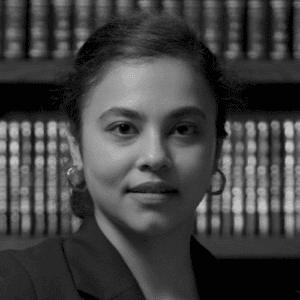
Benti Atwal
Family Law Expertise You Can Trust
Benti K. Atwal is a British Columbia family law lawyer who focuses on separation, divorce, parenting disputes, child support, spousal support, and property division. She takes a client-centered, trauma-informed approach, understanding that family law matters involve both complex legal issues and significant personal impact. Benti represents clients through negotiation, mediation, and court proceedings, advocating firmly when litigation is necessary while encouraging resolution where possible.
Her practice includes parenting arrangements, parenting time, parental responsibilities, guardianship, Section 7 expenses, support claims, and the division of family property and debt. She also assists with separation agreements, prenuptial agreements, and cohabitation agreements under British Columbia law. Benti speaks fluent Punjabi and conversational French and Gujarati, allowing her to serve a diverse range of families across BC with clarity and cultural sensitivity.