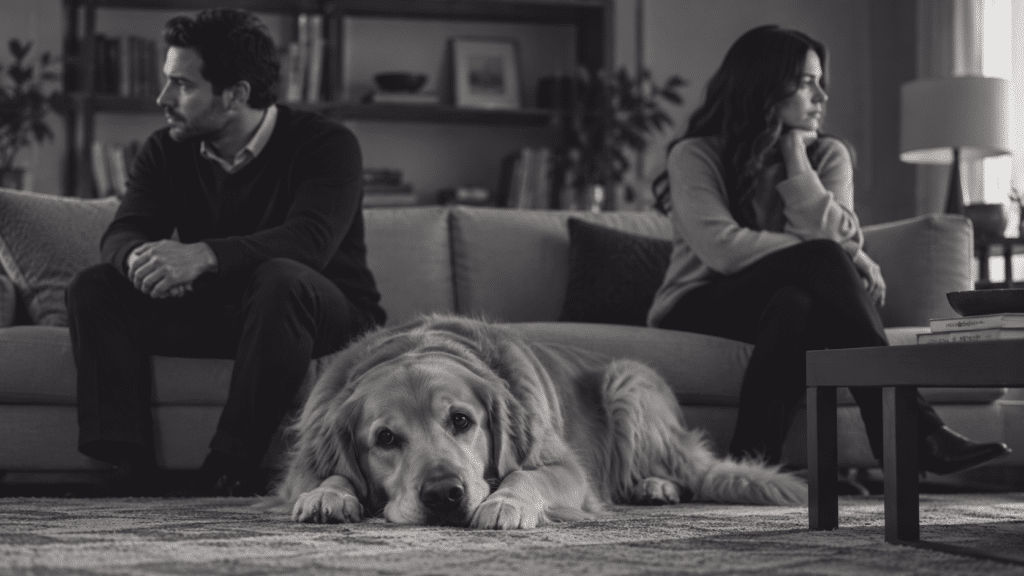
When a relationship ends, deciding who keeps the dog can be one of the hardest parts of the separation. Many people call it “pet custody.” BC law treats the issue a little differently.
Since January 15, 2024, the Family Law Act has included specific rules for “companion animals.” Courts now have a defined list of factors to weigh when deciding which spouse gets ownership and possession of a pet.
BC has not created “pet custody” in the way it handles parenting arrangements for children. But the question is no longer treated like a dispute over furniture or a vehicle.
What Is a "Companion Animal" Under BC Family Law?
The Family Law Act defines a companion animal as an animal kept primarily for companionship.
That will commonly include animals such as dogs, cats, rabbits and other household pets.
The Act specifically excludes certain animals, including:
- guide dogs and service dogs;
- animals kept as part of a business; and
- animals kept for agricultural purposes.
This distinction matters because the special companion-animal rules do not automatically apply to every animal connected to a household.
Who Gets the Dog After Separation?
There is no automatic rule that the person whose name appears on the adoption papers, licence or veterinary account gets the dog.
Those facts can still matter, particularly when showing how the animal was acquired, but the court must look beyond a single document.
Under section 97 of the Family Law Act, the court must consider several factors before making an order about a companion animal. These include:
- how the animal was acquired;
- how much each spouse cared for the animal;
- any history or risk of family violence;
- cruelty or threats of cruelty toward an animal;
- the relationship between the pet and a child;
- each spouse’s willingness and ability to meet the animal’s basic needs; and
- any other circumstances the court considers relevant.
In practical terms, the dispute can turn on the history of the animal’s actual care rather than simply who paid the original adoption fee.
The Person Who Bought the Dog Does Not Automatically Win
One of the most common assumptions in a pet dispute is:
“I paid for the dog, so the dog is mine.”
That can be too simplistic.
How the animal was acquired is one factor, but it is not the only one the court must consider.
Consider a couple who adopted a dog six years ago. One spouse paid the adoption fee, but the other later handled daily walks, veterinary appointments, medication, grooming, feeding, and most of the animal’s care.
The original purchase or adoption evidence would still be relevant. But the history of caregiving may also become significant.
That is one reason these disputes should not be approached as though ownership can always be resolved by producing a receipt.
Spouses Can Share a Dog, but a Judge Cannot Order It
This is where BC law becomes particularly interesting.
The spouses can agree to share possession of a companion animal.
They can also agree to jointly own the animal or give one spouse exclusive ownership and possession. Government of British Columbia
However, the court does not have the same flexibility.
If the dispute goes before a judge, the court cannot order the spouses to jointly own the companion animal and cannot require them to share possession of it. BC Laws
So a couple could voluntarily agree to an arrangement such as alternating weeks with the dog.
But if they cannot reach an agreement and ask the court to decide, the judge cannot impose that same shared-possession arrangement.
That distinction gives separated spouses a practical reason to resolve pet arrangements by agreement when a workable shared arrangement is genuinely possible.
Writing a Shared-Dog Arrangement That Holds Up
Saying “we’ll share the dog” is easy. Living with it is harder, because the vague version fails the first time someone books a trip or the dog needs surgery.
If you and your former partner plan to share the dog, put the details in your separation agreement. A workable arrangement usually settles these points:
- Where the dog lives most of the time, and the schedule for the other household.
- Who makes medical decisions, and whether either of you can approve major treatment alone.
- Who pays for what, including insurance, food, grooming and emergency vet bills.
- What happens if someone moves, especially to another city.
- How the arrangement ends, whether the dog settles with one person, someone gets first right to buy out the other, or you revisit the plan after a set period.
That last point is the one people skip. Because a court cannot order shared possession, your agreement is the only thing holding the arrangement together.
Preparing for Your First Meeting With a Lawyer
A short, organized file saves time and money in a first meeting. For a dog dispute, build it around one question: who has actually looked after the dog?
Start with a one-page timeline. Note when and how you got the dog, who handled walks, feeding and vet visits, and where the dog has lived since you separated. Then add whatever backs it up: vet bills, licence records, photos and messages. A few strong records beat a folder of everything.
Next, think through what you need to ask. These questions tend to matter most:
- Do we qualify as spouses under the Act? This decides whether the companion-animal rules apply to you at all.
- How would a court see our care history? Ask for a frank view, including the weak spots in your evidence.
- Is sharing the dog realistic? A judge cannot order it, so it only happens by agreement.
- Which court fits? Compare Provincial Court and Supreme Court on cost, speed and procedure.
Date Modified:

Benti Atwal
Family Law Expertise You Can Trust
Benti K. Atwal is a British Columbia family law lawyer who focuses on separation, divorce, parenting disputes, child support, spousal support, and property division. She takes a client-centered, trauma-informed approach, understanding that family law matters involve both complex legal issues and significant personal impact. Benti represents clients through negotiation, mediation, and court proceedings, advocating firmly when litigation is necessary while encouraging resolution where possible.
Her practice includes parenting arrangements, parenting time, parental responsibilities, guardianship, Section 7 expenses, support claims, and the division of family property and debt. She also assists with separation agreements, prenuptial agreements, and cohabitation agreements under British Columbia law. Benti speaks fluent Punjabi and conversational French and Gujarati, allowing her to serve a diverse range of families across BC with clarity and cultural sensitivity.